BrainCore Neurofeedback in The Woodlands with qEEG Brain Mapping
Between work, family, and a commute up I-45, it’s easy to reach the end of the day feeling wrung out and unable to relax. Neurofeedback offers a different approach. By providing real‑time feedback on brain activity, it gives your brain the opportunity to build more balanced patterns over time.
At Core Family Health & Wellness, we offer BrainCore neurofeedback with qEEG brain mapping in The Woodlands as a wellness service designed to complement the medical and mental health care you already receive.
What Is Neurofeedback?
Neurofeedback is a noninvasive training process that uses BrainCore technology and qEEG brain mapping to create a personalized training plan designed to support healthier brain function and nervous system regulation.
Think of it like learning an instrument: with repeated practice, patterns can become easier and more natural. Neurofeedback works in a similar way, offering your brain clear information so it can adjust toward steadier rhythms.
Keep in mind that neurofeedback is a wellness and training service, not a medical or psychiatric treatment. Core Family Health & Wellness doesn’t use it to diagnose or treat any condition. Rather, we use it to support your existing treatments.
What is qEEG Brain Mapping?
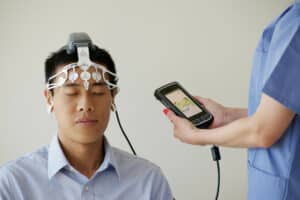
Quantitative electroencephalography (qEEG), also known as brain mapping, painlessly records your brain’s electrical activity through small sensors placed on the scalp. The resulting map shows how your brainwave patterns are distributed, which we use to guide a personalized neurofeedback training plan.
It’s important to note that qEEG is not used to diagnose medical or psychiatric conditions, but rather to support wellness-based brain training recommendations. If results suggest something outside the scope of wellness care, we’ll recommend that you discuss it with your physician or mental health provider.
How Does Neurofeedback Work?
Neurofeedback is based on learning principles similar to operant conditioning, which, in simple terms, uses feedback to encourage desired patterns and reinforce them. No medication is involved at any point in the training process.
Here’s how neurofeedback works with the BrainCore system:
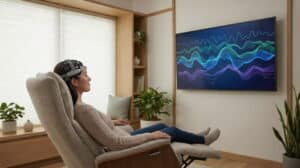
- We track your brainwave activity while you watch a movie or play a game.
- When your brain activity patterns align with our training range, the screen and sound stay clear.
- Deviations from this range cause the screen to dim or the sound to soften, providing feedback.
- When your patterns return to our target healthy range, the screen and sound go back to normal, reinforcing the change.
- The process repeats, giving your brain opportunities to practice holding steadier states.
How much you notice in these sessions and how soon you experience changes vary from person to person, but we’ll discuss your progress with you so you understand how the training is working for you.
Why People Come to Us for Neurofeedback
People typically receive neurofeedback training from Core Family Health & Wellness because they’re looking for support with:
- Stress management
- Focus and attention
- Sleep quality
- Emotional regulation
- Mental clarity
- Relaxation
- Cognitive performance
- Self-regulation
- Getting through demanding periods
Many adults and children report improved resilience, better self-regulation, and greater overall wellness. That said, results differ from person to person, so we can’t make any promises. We’ll discuss your progress every so often to determine whether neurofeedback continues to be appropriate for you.
What a Neurofeedback Session Looks Like
Most people have never done neurofeedback, so it’s normal to feel nervous. Let’s go over what happens in a typical session to help you stay informed and settle your nerves. The process below assumes that we have already developed a training plan based on your qEEG map.
- Setup: You sit in a comfortable chair while your provider places small, harmless sensors around your head.
- Activity: You watch a movie, listen to music, or play a video game.
- Feedback: If your brain activity stays inside our target range, everything plays normally. However, if it drifts outside that range, the screen may dim, or the sound may soften.
- Adjustment: Your brain automatically recognizes the feedback, gradually reinforcing steadier patterns.
Sessions that include both neurofeedback training and red light therapy typically take about 45–60 minutes. The exact length can vary depending on your care plan and goals.
What Neurofeedback Trains
Neurofeedback helps your brain build habits that may become more natural over time. Take the habit of “paying attention,” for example, which revolves around four processes:
- Getting started with an activity
- Staying with the activity
- Noticing when you’ve drifted off
- Coming back to the activity
Your qEEG map shows how your brain activity is distributed across the last two processes. We build your plan from this map, and then each neurofeedback session trains your brain to practice maintaining an engaged state through feedback.
This practice may help you sit with a task a little longer before getting distracted. For children, it could support their attention span during school and homework.
Working Alongside Your Existing Care
A question we get constantly is, “Can I do neurofeedback while I’m taking medication or seeing a therapist?”
Absolutely, and most of the people we work with are doing exactly that. However, neurofeedback isn’t a substitute for medical care, mental health treatment, or prescribed medication.
Book a qEEG Assessment in The Woodlands Today
If you want to know what your brainwave activity looks like, a qEEG assessment is the place to start. Core Family Health & Wellness offers BrainCore neurofeedback with qEEG brain mapping in The Woodlands to support your well-being in daily life.
Schedule a consultation with us today.